The 1960s and 1970s were a vastly different era in Britain. A time when Black and Irish communities lived side by side, working together to help rebuild England’s economy in the aftermath of World War II’s devastation.
Born on April 15th, 1958, Benjamin Obadiah Iqbal Springer was born in Handsworth, Birmingham, to a Barbadian father and a Jamaican mother. And it would be his unique upbringing during the 60s, 70s and 80s that led to him becoming Britain’s most beloved poet, and a co-star of the popular show Peaky Blinders.
This is the story of Benjamin Zephaniah, a man who transformed his early struggles and devoted his life to changing the world through the power of poetry, activism, and storytelling.
Video Version
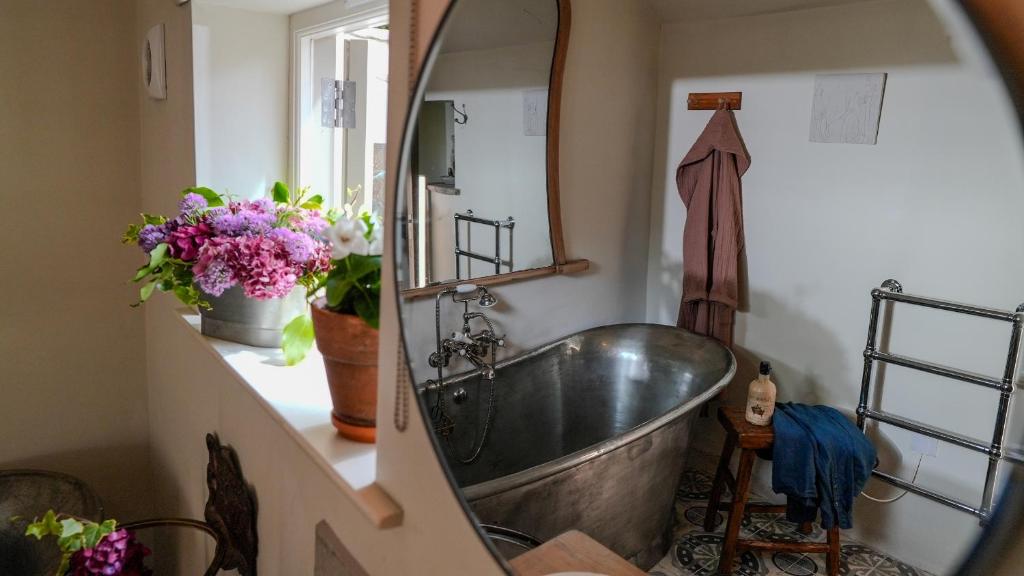
Benjamin Zephaniah was one of five siblings living in Hockley, Birmingham. At the time, his family were considered poor. Their household had a two-at-a-time bathing rule, where Benjamin shared his bath time with his sibling. Because there just wasn’t enough hot water on offer.
Benjamin recalls begging his mother for some more hot water while bathing with his sister Velda. His mother would then appear with a kettle full of water, telling him that there will be no more top-ups after this.
Everything about the family’s surroundings was grey. Grey skies from the smoke and fog of factories, gray pavements, and gray tin baths. This was the life for many families like Benjamin’s back then, but the beauty in the situation was that he and his family had each other.
Growing up as a young black boy in the West-Midlands was tough. Children back then had to walk around with thicker skin, because they would continuously encounter racism. Benjamin noticed how his teachers at school would speak to him in a rougher tone of voice than other children, and often treat him as if he was stupid. His classmates would call him names and racial slurs.
But as they were just words, Benjamin let these insults slide. Sadly, it wouldn’t be long before the racism turned physical.

It was a warm, sunny day, and Benjamin had just been playing football with his friends. Birds were chirping, dogs were barking, and Benjamin was smiling. He set out on his way home, coming up with rhymes about the sun in his head. Out of nowhere, Benjamin heard someone yell the words “Black Bastard!”
Before he had time to locate the person, a heavy house brick nailed him at the back of the head. A rider on a bicycle had the brick in his hand, and hit Benjamin with it as he rode past, making the force of the attack terrifying.
The rider looked back at Benjamin and yelled, “Go home, wog!”
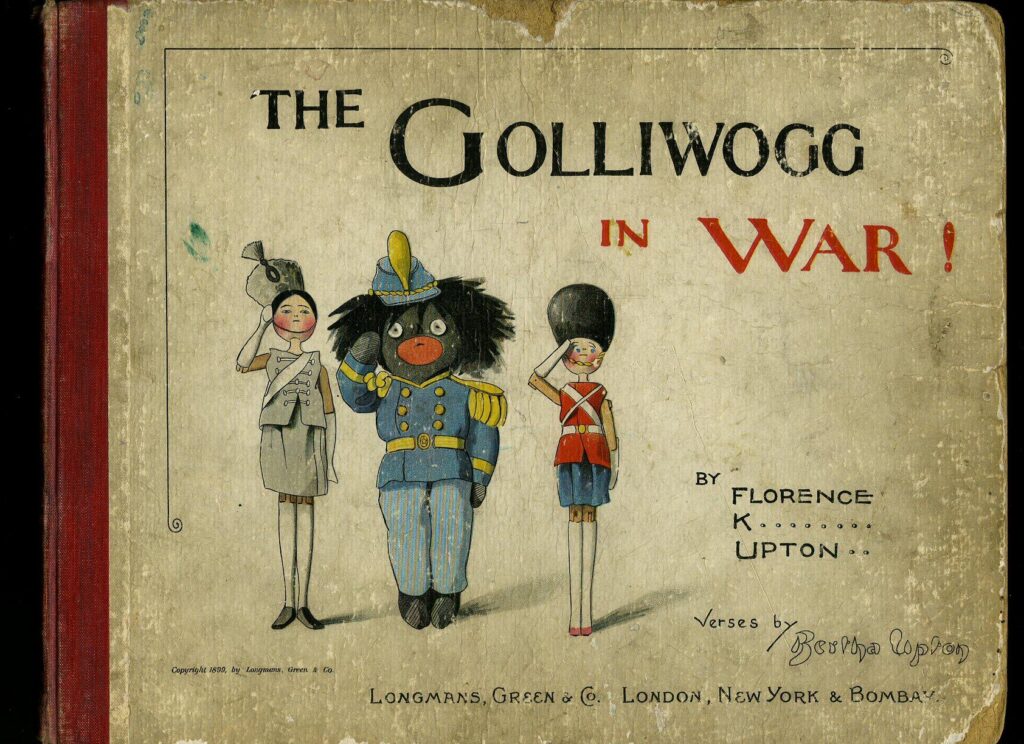
For those unfamiliar with the term wog, it refers to a popular rag doll back in the late 19th century, created by cartoonist Florence K. Upton. The doll had dark skin, big red lips, and frilly black hair. The doll is based on blackface minstrel traditions, which were prominent back then. So naturally, racists would correlate the Golliwog dolls with black people.
Unable to process what he’d just experienced, Benjamin ran home to his mother and told her about the encounter, specifically the part about the boy telling him to go home. His mother reassured him. “This is home, Benjamin,” she said. “This house is your home.”
Racial tensions were high in this era, and Benjamin’s family had to navigate this on a daily basis. Benjamin described his mother as someone who would ignore people who were being blatantly racist to her face, and act like it wasn’t happening. In his autobiography, Benjamin says:
“She was always trying to see the good in people. Even when the people weren’t good.”
This kind of blind optimism in the face of atrocity is perhaps what set the foundations for Benjamin’s strength of character later in life, giving him a sense that everything would be okay, even when it wasn’t.

Thankfully, Benjamin found some friends in the Irish and Gypsy communities. You see, back then, many British people disliked the Irish nearly as much as they disliked black people. This allowed black and Irish families to relate and find common ground among one another, paving the way for Benjamin to find common ground with the Irish and Gypsy kids. Benjamin was the type of person who would embrace anybody of any race, or gender. He believed in treating others how he wished to be treated.
He got on so well with his Irish friends that he’d even fight to project them. Sticking up for them when they were bullied.
Benjamin Zephaniah’s Early Poetry Influences
Poetry was introduced into Benjamin’s life at an early stage through his mother, Lineve, but not in any conventional way. His mother would often speak naturally in a rhyme pattern, sometimes stretching out words intentionally to make them rhyme. She would never call herself a poet, to her, it was just a way to aid her memory and keep her children entertained.
Lineve Faleta Honeyghan was born in the St Elizabeth parish, in the southwest of Jamaica. She was raised in a big family, and lived in Jamaica up to her early twenties. This meant that she had soaked in much of the Jamaican cultural values. Typically, Jamaicans love rhymes, poems and metaphors, and insert them into their speech.
Rhymes and music would continue to play a huge part in Lineve’s life when she settled in Birmingham. When Benjamin was young, his parents owned an old-school Radiogram. This device was a combined radio and record player unit built like a cabinet.
His parents, Lineve and Oswald, would keep the radiogram in a room designed especially for entertaining friends. Benjamin had many memories of Saturday afternoons, when his parents friends and family members would come over. The men would be wearing suits, and ties while pouring themselves glasses of rum. While the women would be in the kitchen wearing colorful dresses and mixing fruit punch. Everyone enjoying the latest and greatest sounds from back in the Caribbean. Benjamin would mingle with the adults, despite being much younger than them. And it was here when he started to develop his ability to rhyme.

When the songs would fade out, Benjamin would continue rhyming words in his head, picking up the themes from the song that had just played. Sometimes he’d also do this at school or at the local playground.
He would make up rhymes for the girls he had a crush on after playing kiss-chase. While the other boys were out of breath from running, the girls were kissing Benjamin after hearing his rhymes about them. There was no running required for him, just rhyming. Keep in mind that at this age, those kisses were more like pecks on the cheek.
As Benjamin grew into his teens and early adulthood, he would experience many hardships in his life that would force him to be socially aware of the events taking place around him.
Fighting Back Against Domestic Abuse
Throughout his life, Benjamin had an estranged relationship with his father. Oswald Springer, a Barbadian man, worked at the post office. With his mother being Jamaican, and his father Barbadian, there were sometimes cultural differences between the two.
Benjamin, had known his father to be somewhat violent. Oswald would give him harsh beatings whenever he did something wrong. But things came to a head one day when Oswald was lashing out at his mother. Despite being young, Benjamin wouldn’t stand for it. He stuck up for his mother, trying to fight back against Oswald the best he could.
This altercation would inevitably lead to Benjamin and his mother leaving the house and finding other places to stay. They even left behind Benjamin’s siblings, who would stay with Oswald for a time.
Lineve and Benjamin would seek refuge at women’s shelters, but Lineve would be turned away, because the other women at the shelters weren’t comfortable with a black woman being around. In this era, racist discrimination was prevalent.
Together, Benjamin and his mother would jump from place to place, moving around Birmingham and sometimes renting small rooms.
Becoming Vegan Before Knowing What Veganism Was
Another event that would shape Benjamin’s conscious future was when he made an important life decision for himself. At eleven, Benjamin would have a serious boy to woman talk with his mother at the dinner table.
You see, Benjamin had never enjoyed eating meat. He was the type of boy who loved animals, and he knew early on that meat was associated with animals. When Benjamin was given a plate of food to eat, he’d always have a bag under the table to slip the meat into. And then he’d throw away this bag when he brought his plate into the kitchen.
So on this one day at the dinner table, his curiosity led him to ask his mother some questions about meat.
“Where did you get the meat?” Benjamin asked her.
“The Butcher,” his mother replied.
“Where’d the butcher get it from?” he asked.
“From the farmer,” said his mother.
So Benjamin went on to ask the obvious question: “Where did the farmer get it from?”
His mother said “He got it from the cow.”
What a clever cow, Benjamin thought to himself. And then he went on to ask the question “What is the cow doing with meat?”
“You silly boy,” his mother replied. “This IS the cow.”
Benjamin was horrified to have his suspicions confirmed about meat. He pushed his plate away and said “I won’t eat my friends.”
And that was the last time Benjamin was ever given meat to eat. He told everyone about his decision, even the dinner ladies at school. His friends would question why he’s only eating potatoes and vegetables.
Later, at thirteen years old, Benjamin would double down on his decision and go full vegan. He realized that mother’s produced milk for their children, and it was the same for animals. He stopped drinking milk, and consuming any form of dairy product.
At the time, this was unheard of for a child of Benjamin’s age with no medical condition. Veganism wasn’t even a term people used back then, so it wasn’t like Benjamin was even aware that it was an option. His venture into veganism was purely organic. It was a conclusion that he came to himself as a child, and that’s what makes it powerful.
Benjamin’s Adolescent Years
A turning point came in Benjamin’s life when his mum entered a relationship with a pastor. Young Benjamin and his mother would eventually move in with the Pastor and his family, and Benjamin inherited a whole new family. The pastor’s house was always packed, and Benjamin shared a bed with up to three or four other children.
It was living here where Benjamin would grow into his adolescent years and experience many things for the first time, including his first adult kiss with a girl.
Benjamin and the Pastor’s son Trevor became best friends, and together, they developed their love for football and reggae music. As with many young boys, Benjamin and Trevor got up to wild extracurricular activities.

These activities turned from innocent but defiant to straight up risky and illegal as the kids grew up. You see, teenagers feel pressure to be like their peers. If there are cool kids with all the best clothes, then other kids will want to fit the same image, even if their parents can’t afford to fund that level of fashion. This motivated Benjamin, Trevor and their friend Philip to make their own money.
Together, they would carry out a string of robberies. This inevitably led to Benjamin being arrested and charged, and he’d soon have to appear in court. Benjamin, Trevor and Philip would all end up confessing to their crimes, but as they were still very young, their punishments weren’t severe.
Benjamin’s criminal activities would continue, as he would be involved in petty thefts and robberies.
At one point, he was also accused of sexual assault. However, this was overturned when a prostitute came clean and admitted that a police officer forced her to say that Benjamin had sexually assaulted her. She felt sorry for Benjamin being set up and couldn’t live with his conviction being on her conscience.
These are the things that take place when a young man, full of energy and ambition, has little opportunity to capitalise on.
At this time, corporate jobs weren’t widely accessible to a young black man. There was either low-paying jobs, or the street economy.
The Rastafarian Life
Despite there being little opportunities for Benjamin to shine, there was one outlet that allowed him to display his creativity in full effect. Benjamin, Trevor and some of their other friends would toast at blues parties.
The way these worked is that people would find empty houses, or flats that were between tenancies, and they would bring sound systems, drinks and food into the location. The sound systems weren’t your typical stereos. They were custom-built rigs the size of wardrobes. The parties would be promoted through would of mouth, causing all the local community to show up. Because these parties were illegal, police would sometimes raid them, shutting down the party early in the night.
But there were no bad intentions behind these parties. They were all about absorbing the vibes from the music: which would be a mix of hard reggae, reggae with no words, and reggae dubs—which are remixed and enhanced versions of existing records. In fact, parties like these set the foundations for the clubs, raves, and house parties that would become mainstream throughout the late 80s, 90s and 2000s.

It was in these environments that Benjamin would learn how to freestyle, coming up with on-the-spot lyrics and poetry that fit with the music being played. A microphone was readily available for anyone who could exercise these skills, and Benjamin realised people would listen to what he had to say whenever he did.
This is what’s called toasting. It was the toaster’s job to be a social commentator and use wit and verbal dexterity to communicate with the audience, speaking about culture, politics and police brutality.
Many of the toasters at the parties would talk about things happening in Jamaica, which was a common theme throughout these nights. Benjamin did something different to stand out. He spoke about topics affecting people directly in Handsworth, as well as topics affecting other parts of the world like South Africa. He’d even shed light on the Vietnam War. After such a performance, the echoes of praise would often follow him.
“Wise words, brother!” people would tell him after stepping off the stage.
This was the confidence boost he needed to consider taking his talents to the next level.
This was also around the time when Benjamin made his Rastafarian name official. It was made official by an Elder of the Rastafarian Twelve Tribes. It was a simple ceremony, which included the burning of ganja in a chalice, with drums being played, and an elder reading from the book of Zephaniah.
Most Rastafarians take names that are biblical or African. The important thing is not to take names passed down from slave owners. For example, Bob Marley’s Rastafarian name was Joseph. Trevor Sutherland was Ijahman Levi, and Michael Williams was Prince Far I.
With that, Benjamin Obadiah Iqbal Springer officially changed his name to Benjamin Zephaniah. He would also visit Jamaica often, meeting his friends and family back home.
Leaving Birmingham for London to Persue Poetry
One summer night in 1978, Benjamin lay on his bed watching the ceiling, wondering what life was all about. He reflected on the bad choices he’d made in his life, like the circle of crimes he’d been involved in. He recalled the teacher at Broadway Comprehensive, who had told him he was a born failure who would end up dead or in prison.
Benjamin knew that if things carried on the way they were, with no opportunities for growth in his life, then the teacher would be proven correct.
Since he was eight years old, he’d been telling everyone that he was going to be a poet when he grew up. Since then, people often praised his poems and toasting performances, but he had nothing to show for it.
Benjamin reached under his bed and pulled out a big folder full of his poems. Inside was a letter he’d received from Bob Marley after writing to him and posting the letter years ago. The letter was brief, but the message from Bob was powerful. It read: Britain needs you, so forward on. Meaning that Bob Marley respected Benjamin’s work that had been sent to him, and he recognised Britain would benefit from being home to a raw talent like Benjamin.
The next day, Benjamin went to his friends. These were friends he’d been selling stolen car parts with to get by. He told them he couldn’t do it anymore and that he was moving to London. His friends protested. “Come on, man. You know you can make good money here,” they said.
Benjamin told them he remembered how good he was toasting on the sound systems, and that his heart was with his poetry. He told them he wanted to be a revolutionary poet, and that it was crunch time. Benjamin paid them whatever he owed them, and when they asked when they’d see him again, he told them, “next time you see me, it will be on TV.”
Benjamin sounded confident, but in reality, he had no idea how he was going to do this. But if he didn’t speak it like it was possible, he knew his ambitions would fall flat from the start.
Benjamin didn’t even have a place to go to in London. By chance, a friend of his gave him the address of one of his ex-girlfriends named Clara in London, in hopes that Benjamin could go to her and figure out somewhere to sleep. Benjamin packed a few things, jumped into his Ford Escort, and drove through Birmingham toward the M6.
He stopped along the way at a music rehearsal space where a band was rehearsing. The band didn’t have a name yet, but they would go on to call themselves UB40. Benjamin knew some of the guys they hung out with, so he stuck around and mingled.
He noticed a girl watching the band. Attracted by her glamourous look, Benjamin spoke to her, and ended up convincing her to come to London with him. She agreed, and the two of them set out on the journey.
When they arrived in London, Clara wasn’t home. And she didn’t return for two days. That meant Benjamin and his new lady friend were stuck sleeping in the Ford Escort for two nights in a row. When Clara did return, she was happy to see Benjamin, as she’d met him once before when she dated his friend in Birmingham.
Clara made her money on the streets. And her home was a refuge for ladies of the night. That meant that Benjamin and his new friend often had to take whatever beds were available each night.
One day, Benjamin’s lady friend called one of her friends back home. She heard about how UB40 was taking off in their careers. They told her that she should have never left. After that, she up and disappeared without a word. Benjamin was now on his own in London. And with no one else to look after, he could focus on his next steps to success.
Clara was a godsend. She never asked Benjamin for a penny in rent. Benjamin felt bad for this, and considered registering as unemployed to get some money that he could give to her. She shot the idea down, but Benjamin knew he couldn’t rely on her forever.
One day, Benjamin went to hear a sound system in Brixton called Soferno B. He was dancing with a Jamaican girl, in a style called wyning. Someone tapped Benjamin on the shoulder and he turned around.
It was his old friend Pops from Wolverhampton. They were happy to see each other and spent some time catching up. Soon, Pops told Benjamin he knew a place where he could stay rent free.
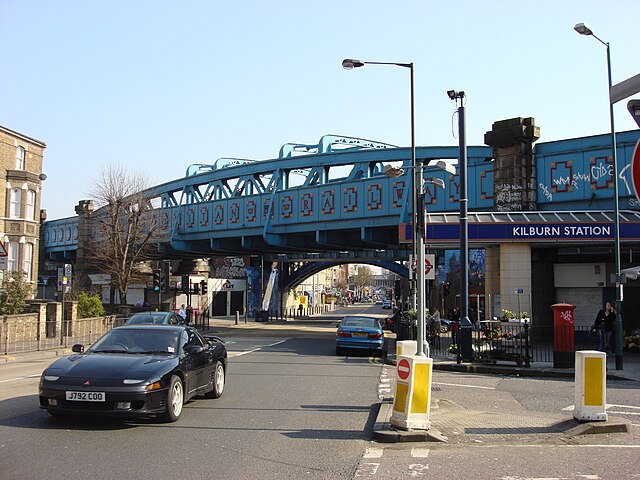
It was a licensed Squat for artists and creatives. It was property that the council in Kilburn, North London owned but didn’t know what to do with, so they allowed creatives to stay there while they worked on their projects. Benjamin later thanked Clara and moved his small number of possessions to the place in Kilburn.
The place was perfect for Benjamin at the time. It had a bed, kitchen, toilet, and running water. The only thing it lacked was a bath. But there was a public bathhouse nearby that could be used for 50p. Benjamin had his own room, but shared the place with others. The place was a magnet for musicians with alternative styles.
Through networking at this location, he was connected with a woman called Sheila who helped him type up the early version of his poetry collection, Pen Rhythm. The book was still incomplete as Benjamin continued to soul search and perfect his fusion of Rastafarian spirituality and politics. He would sometimes watch news reports on TV, and they would get him so fired up for change that he’d write new poems. This was how the poem Happens Every Day was created.
When Benjamin read the poem the next morning, he was shocked that it came from him. He said this about Happens Every Day:
“It was as if there was some greater power working through me and controlling the pen.”
He would go on to type up more collections during this time, such as: Calling Rastafari, and City Psalms.
Rock against Racism and the National Front
In 1976, parts of London were becoming extremely progressive, and there were groups who didn’t like this. Around the time, Benjamin found himself experiencing new things. He would attend rock gigs where he was one of the only blacks in attendance.
On some occasions, rock groups would play on the same bill as reggae artists, fusing the fanbases even more. Sadly, not everyone looked at this unity as a positive thing.
A British politician named Enoc Powell once said that Britain was in danger of becoming a black colony. Legends like Eric Clapton publicly agreed with this.
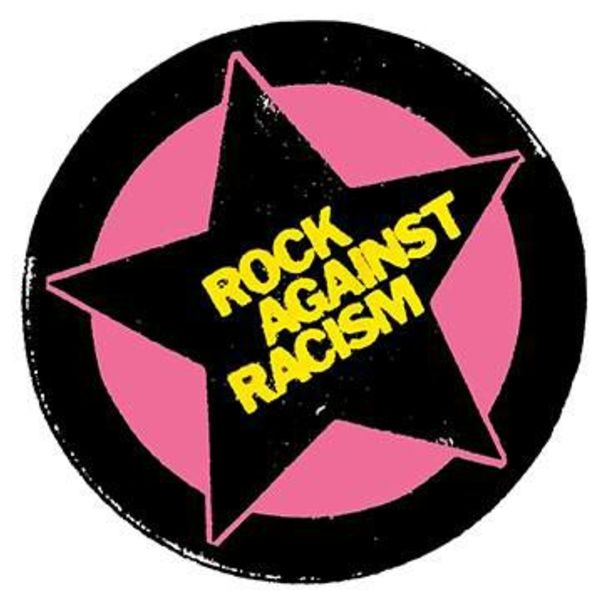
A man named Red Saunders formed Rock Against Racism. Benjamin would attend their concerts as they consisted of a nice mixture of punk rock and reggae artists. Cultures were united at these events, and they served as great networking venues for Benjamin at this time.
Two weeks after the concert named Ruts, people who had attended the concert formed to protest against the National Front.
For those who don’t know – the National Front was a political party in the UK that held racist views. They raided cultural events that included black people and got them shut down. This often led to violent brawls in the streets as people wouldn’t take this behaviour lightly.
When the Rock Against Racism crowd teamed up with the ANL (Anti Nazi League) to protest a National Front meeting in Southall, it led to the events of the notorious Battle of Southall.
The event escalated into chaos, and many who attended the event noticed the police taking the side of the National Front. In the midst of this chaos, one of the protestors, Blair Peach, a teacher and a member of the Socialist Workers Party (SWP) and the Anti-Nazi League (ANL), was killed. One of Benjamin’s friends was hit with a police baton so hard that she lost parts of her memory.

And in his biography The Life and Rhymes of Benhamin Zephaniah, Benjamin recalls someone taking a photo of him struggling while being arrested. Benjamin later tried to find this photograph but was unable to track it down.
With his nose bleeding and his arms forced behind his back, Benjamin was forced into a police van where he was beaten even more, while hidden from public view. They even ripped out a few of his dreadlocks and kept it as a trophy.
Just like the current day, these were politically charged times and Benjamin was right in the thick of it all. These events would further refine his message, as he set out to unify and empower as many people as possible.
How Benjamin Zephaniah Published His Works
Performing locally during open mic nights was swell, but Benjamin knew that to really get his work to spread, he needed to get his poetry published. This was no easy task, even back in the late 70s and early 80s.
At first, he would try the traditional method of posting his poetry to publishers with a cover letter attached. This got little to no traction, so Benjamin opted to turn up at the publisher’s doorstep so he could perform the poetry if required. He knew the poems would connect with his audience better if he had the opportunity to perform them.
This approach earned him many confused looks. People would treat him as if he was deranged. Some went as far as to tell him that they don’t publish Rastafarian poetry.
This was an era when black poetry just wasn’t something that was pushed to the public. There was no data for its performance, so most publishers wouldn’t take the risk of publishing someone unknown like Benjamin at the time.
Luckily, he found luck when someone recommended he visit a bookshop in Stratford called The Whole Thing. The Whole Thing was known as an alternative bookshop, which sold gay, feminist, Irish and black publications. But beyond that, they also published their own books. They were what we know now as Independent Publishers.

They read Benjamin’s poems and told him right on the spot that they’d like to publish him. But there was a caveat. They weren’t the type of publishers who took an author’s work and made it publishable themselves because they lacked the same number of staff as a traditional publisher. This meant that Benjamin would have to collaborate throughout the publishing process with them, taking a hands-on role in the publishing process. Benjamin agreed without hesitation.
For weeks, Benjamin would work on the layout of the book and format his poems onto the pages. He would then bind the book together once they had every page crafted.
Then, in 1980, after Benjamin Zephaniah had been in London for two years, he successfully published his first book, Pen Rhythm. It was a thin book, only slightly thicker than a booklet, but Benjamin had done it. He’d published his work, and learned all about bookmaking during the process.
He was told that Pen Rhythm was well received, but he had no way of knowing this for sure, until he got an unsuspecting visit three months later.
Benjamin was visited by an independent filmmaker at the bookshop who went by the name Simon Heaven. Simon told him about a new TV station that was launching, with a focus on making films about marginalised and minority communities. That station was to be known as Channel 4.
Simon was commissioned by the station to create a number of documentaries based on alternative poets, and Benjamin was at the top of his list. Benjamin agreed, but he was very nervous about the idea.
Benjamin found out first-hand how much self-censorship and correctness happened within the British media, as the producers found his message raw and unfiltered. They would ask him a number of times to repeat the things he said in a more general way. In the documentary, he would speak about topics relating to African countries under the control of other nations, and the conflicts with Catholics in Northan Island.
Originally, the documentary was to be a part of a series. But Benjamin’s appearance was so impactful that it ended up becoming its own original production. For those curious, you can find the documentary online right now.
Benjamin Zephaniah would publish many poetry compilations throughout his career. Because his early compilations like Pen Rhythm and The Dread Affair were independently published in small volumes, they are rare and hard to come by today. However, Benjamin would later sign deals with major publishers where he would republish some of the poems in new compilations. Notable compilations that you can buy today include Talking Turkeys, City Psalms, Too Black Too Strong, and School’s Out for the youths.
Winning the Young Playwright of the Year Award from the BBC
With his grassroots success giving him a newfound confidence, Benjamin would flex his newly discovered writing muscles in a number of ways. He got into writing for theatre in 1985 after his friend Derek Brown suggested he get into writing for youth theatre. Benjamin had previously never set foot inside a theatre, until he saw the play Welcome Home Jacko at the Theatre Royal Stratford East. Inspired by the play, Benjamin wrote Playing The Right Time, a play he wrote for young people with the intention of tying in Nelson Mandela related themes. At the time, Benjamin Zephaniah was invested in Nelson Mandela’s freedom. Playing The Right Time would get a significant run, playing at the Theatre Royal, and the Riverside in Hammersmith.
His next play was Job Rocking in 1987, a dub opera play that showcases the realities of a Job Centre under Margeret Thatcher’s rule. As the play emphasised the lack of opportunities for minorities and common folk, the play would continue to be relevant for decades, and even today its themes remain relevant with the bleak opportunities we face in modern Britain.
In 1988 Benjamin won the BBC Young Playwright of the Year award for his work, a significant achievement for him while he was still under 30 years old. Off the back of this accomplishment, a producer named Jeremy Mortimer encouraged Benjamin to write a novel.
How Benjamin Zephaniah Got Into Writing Fiction
At the time, he had been working with an editor at Puffin named Emma who worked with him to publish his poems previously. Emma later switched to Bloomsbury and asked Benjamin if he’d ever considered writing a novel for teenagers. The timing aligned perfectly for him. The only problem was, Benjamin was unsure whether he really had it in him to write a full novel. He was a poet, not a novelist. And although he clearly possessed the creativity needed to write a novel, it was still a unique process.
Benjamin went back to Emma and told her: “I’m a poet, not a novelist. I write poems, not novels.”
Emma smiled. Believing in his capabilities, she replied: “Okay, Benjamin, here’s a cheque. Go away, write a couple of chapters, and if it doesn’t work out, don’t worry, keep the money and forget it. But you like what you’ve done, then carry on.”
Benjamin had nothing else going on at the time so he decided to give it a try. By now, he had a notable reputation for his work in activism. The messaging in his work was respected. But Benjamin wanted to do something different with this project. Instead of basing it on racial or sexual discrimination like his other works, he came up with a concept centered on facial discrimination.
This is how the story Face was born. The story is about a good-looking 14 year old white boy named Martin who wants to be an actor and model. Martin has everything going for him until he suffers severe injuries in a car crash and is terribly scarred. Then his path changes forever. His face is no-longer desired in the acting world and no modelling agents will hire him. Even his friends change. Martin goes on a journey of self-discovery where he learns why it’s important not to judge people by their looks.

Buy Face by Benjamin Zephaniah
Both Emma and the publisher were pleased with the manuscript. And Face would go on to see satisfying sales. The media compared Benjamin to big names in children’s literature, and readers would start demanding more work from him. Emma suggested that Benjamin get an agent when he began work on his second novel, Refugee Boy.
Refugee Boy tells the story from the perspective of a 15 year old refugee from Ethiopia. It focuses on the struggles and realities of a teenager merging into the new realities of British life after escaping the atrocities of war. This is another culturally relevant book today. Benjamin would go on to write more novels, including Gangsta Rap.
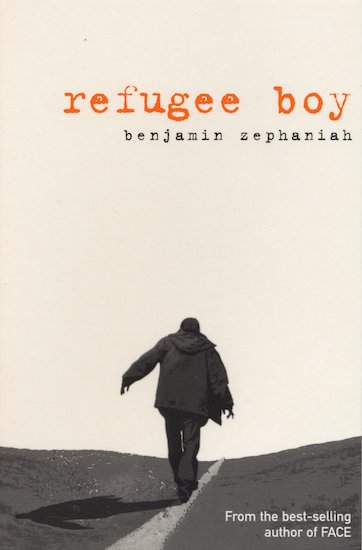
Buy Refugee Boy by Benjamin Zephaniah
Gangsta Rap is the story of a young boy named Ray who loses faith in school and the system. He has nowhere to stay and ends up sleeping in the local record shop. While there, he develops his love for music, coming up with rap records. His friend Marga Man gets Ray a record deal, but a group of rap rivals dislike Ray’s success, and gang warfare is the only way they see to get back at him. It’s a touching story, and this was my first experience with Benjamin’s work in 2004.

Gangsta Rap by Benjamin Zephaniah
Meeting Nelson Mandela
Benjamin’s activism would take him many places, and after partnering with the British council, he would tour in notable places around the world, like Palestine and parts of Africa. As I mentioned earlier, Benjamin was always invested in Nelson Mandela’s freedom, after Mandela was wrongfully imprisoned due to racial segregation and apartheid in South Africa.
On February 1990, Nelson Mandela was freed from prison after 27 years. Benjamin watched his walk to freedom on TV like many others at the time. Months later, Benjamin would actually get the chance to meet Mandela in person, and too his surprise, it was Mandela who asked to meet him.
Mandela came to England on the 16th of April 1990 to attend a concert being held in his honour. During his time here, he would make the rounds, meeting with notable people like royalty and elected officials. Benjamin Zephaniah would receive a message telling him that Mandela wanted to meet with him.
Mandela requested that they meet at a ridiculously early time in the morning, but Benjamin made the effort to attend, driving to central London to meet him. Benjamin couldn’t believe the amount of praise Mandela was offering him during their meeting. It was to the point that Benjamin had to remind Mandela that he’s the one who spent 27 years in prison unjustly and is now an icon.

The two talked for half an hour about many topics. Like those who were once pro-apartheid now celebrating Mandela’s release to save face. Mandela would also confirm to Benjamin that he had read his poetry while in prison, and that was why he was interested in meeting him.
An Accomplished Life
Here was Benjamin Zephaniah, once a humble boy from Handsworth, Birmingham, now shaking hands with one of the most famous men on the planet at the time, and having his own work and accomplishments validated.
Benjamin’s work often spoke directly about the injustices that Mandela was forced to endure. And it’s wonderful to see that his words had an impact on those directly affected by the themes he brought to light.
At one point, Benjamin turned down an OBE offered to him while Britian was under Tony Blair’s regime. It’s a UK royal honour, one that many would be proud of accepting. But Benjamin couldn’t bring himself to accept it with his beliefs. He wouldn’t push aside what he stood on to be honoured by a system he knew had created problems for people all around the world. The UK was at war with the middle east at the time, something Benjamin firmly opposed. Benjamin was attacked publicly after refusing the honour, but the community at large would support him and reject the slander.
This was who Benjamin was. He was a humble man who took the gift he had and homed in on it, transforming himself into one of Britain’s most important voices in activism and social change.
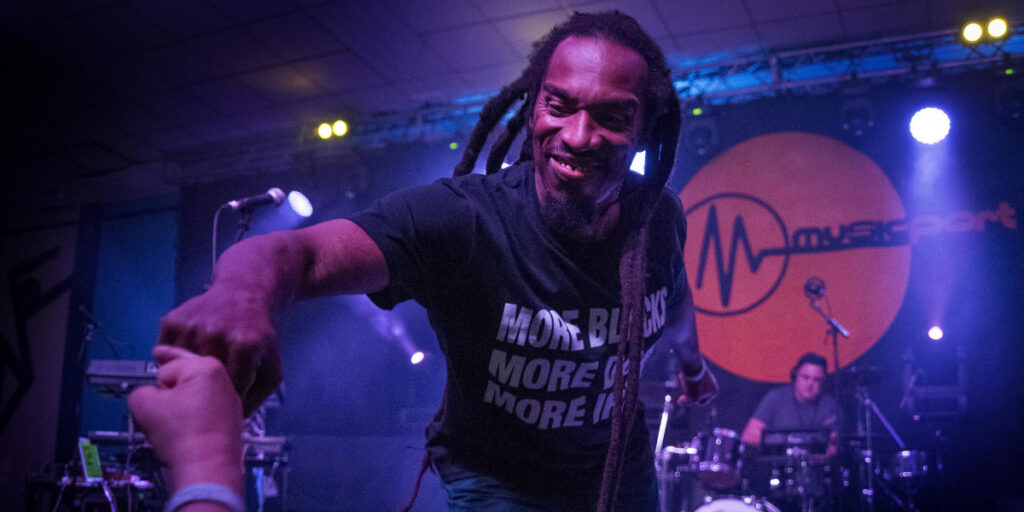
Benjamin accomplished many things through his career: He made records with The Wailers, the band founded by Bob Marley. This was after Bob Marley’s death in 1981. To think, Benjamin was once inspired by the words that Bob Marley wrote to him, and now he’d done work with Benjamin’s own band. Benjamin’s inspirations would often come full circle, just like his collaboration with The Wailers, and his meeting with Nelson Mandela.
Later in life, he was invited for a residency in Liverpool, after rebelling against a hit piece written about Benjamin in The Sun newspaper. When Benjamin was invited to be a don at Cambridge University, The Sun ran an article asking why anyone would let Benjamin near their child. The article framed him as a vile Rastafarian, using some of his poetry against him by separating the words from their context.
Thankfully, the people rallied against The Sun, forcing them to later apologize. The people of Liverpool defended Benjamin and invited him for the residency where he did performances, spoke at schools and ran an open house where writers could connect with him any time during the day.
Benjamin would then later serve as a professor of poetry at Brunel University, and he also joined the cast of Peaky Blinders, appearing in 14 episodes. His was a life full of accomplishments.
Benjamin married twice in his lifetime. Once to a woman he met in Liverpool named Amina. After being divorced, he later married Qian-Chien Jang Zheng, who he met on a visit to China.

The Death of Benjamin Zephaniah
On the 7th of December, 2023, the world lost Benjamin Zephaniah when he died from a brain tumour that had been diagnosed eight weeks prior. Benjamin may have transcended, but the work he’s done for the past 40 years has led to many conscious awakenings in Britain, specifically on topics of racism, corruption, veganism and sexual abuse.
Poet and criminologist Martin Glynn spoke on Benjamin’s impact on poetry after his passing, giving a plausible summary of his importance:
Zephaniah was “never an establishment person”, but “got into spaces” where he felt he could be heard. Glynn said: “He was the James Brown of dub poetry, the godfather… Linton Kwesi Johnson spoke to the political classes, but Benjamin was a humanist, he made poetry popular and loved music. He had his own studio…. He did what John Cooper Clarke did with poetry and that was bringing it into the mainstream.”
Benjamin was a man who felt deeply about the injustices of the world and used poetry as his way of fighting back and communicating with the world at large. When fame came his way, he never fed into it and indulged in the celebrity lifestyle. Instead, he gave back to the various communities around Britain that embraced him. Becoming a beacon of love. One Love.
One Love is a Rastafari message made popular by Bob Marley. It means unity, universal love, and respect for all people.
As Benjamin Zephaniah said himself:
“I would like to be remembered as someone who really believed in One Love.”

Links & References
Books
- Pen Rhythm (1980), Page One
- The Dread Affair: Collected Poems (1985), Arena
- Rasta time in Palestine (1990), Shakti Publishing Ltd.
- City Psalms (1992)
- Inna Liverpool (1992)
- Talking Turkeys (1994)
- Propa Propaganda (1996)
- Funky Chickens (1997), Puffin
- School’s Out: Poems Not for School (1997)
- Funky Turkeys (audiobook) (1999), Puffin
- Wicked World! (2000), Puffin Random House
- Too Black, Too Strong (2001)
- The Little Book of Vegan Poems (2001)
- Reggae Head (2006), spoken word audio CD
- To Do Wid Me (2013), Bloodaxe Books
- Face (1999), Bloomsbury
- Refugee Boy (2001), Bloomsbury
- Gangsta Rap (2004), Bloomsbury
- Teacher’s Dead (2007), Bloomsbury
- Terror Kid (2014), Bloomsbury
- Windrush Child (2020), Scholastic
- The Life And Rhymes of Benjamin Zephaniah (2018)
References